
Our Commitment
Winstone Aggregates is committed to caring for and restoring nature for future generations. As a business that works closely with the land, we recognise our environmental impact. Guided by science and cultural values, our 2030 strategy focuses on boosting biodiversity, building strong partnerships and leading sustainable land stewardship across Aotearoa.
We are using the Biodiversity Indicator & Reporting System (BIRS) and a framework in collaboration with Nature Positive, aligning its conservation activities with international standards. The Biodiversity Management and Action Plans will help monitor and improve ecosystem health throughout the quarry lifecycle.
Winstone Aggregates’ initiatives to restore flora and fauna habitats around its operational sites are part of our commitment to kaitiakitanga – aiming to balance modern science with mātauranga māori, partnering with mana whenua to ensure the initiatives support both biodiversity and cultural values.
For Winstone Aggregates, creating a lasting positive impact goes hand-in-hand with our core values.
The Journey
Maungakawa Scenic Reserve, Waikato
Our commitment to achieving a positive biodiversity impact by 2030 is taking shape at Maungakawa Reserve through a collaborative pest control initiative with Ngāti Hauā.
- Pest control: 997 hectares of tawa-dominated forest received targeted possum and rat control in 2024.
- Monitoring results: Our pest control programme has achieved a marked reduction in possum numbers, with RTC scores dropping from 5.43% pre-monitoring to 1.28% post-monitoring, a promising step toward ecosystem recovery.
This ongoing work blends mātauranga māori and western science, ensuring restoration efforts are guided by both cultural knowledge and scientific best practice.
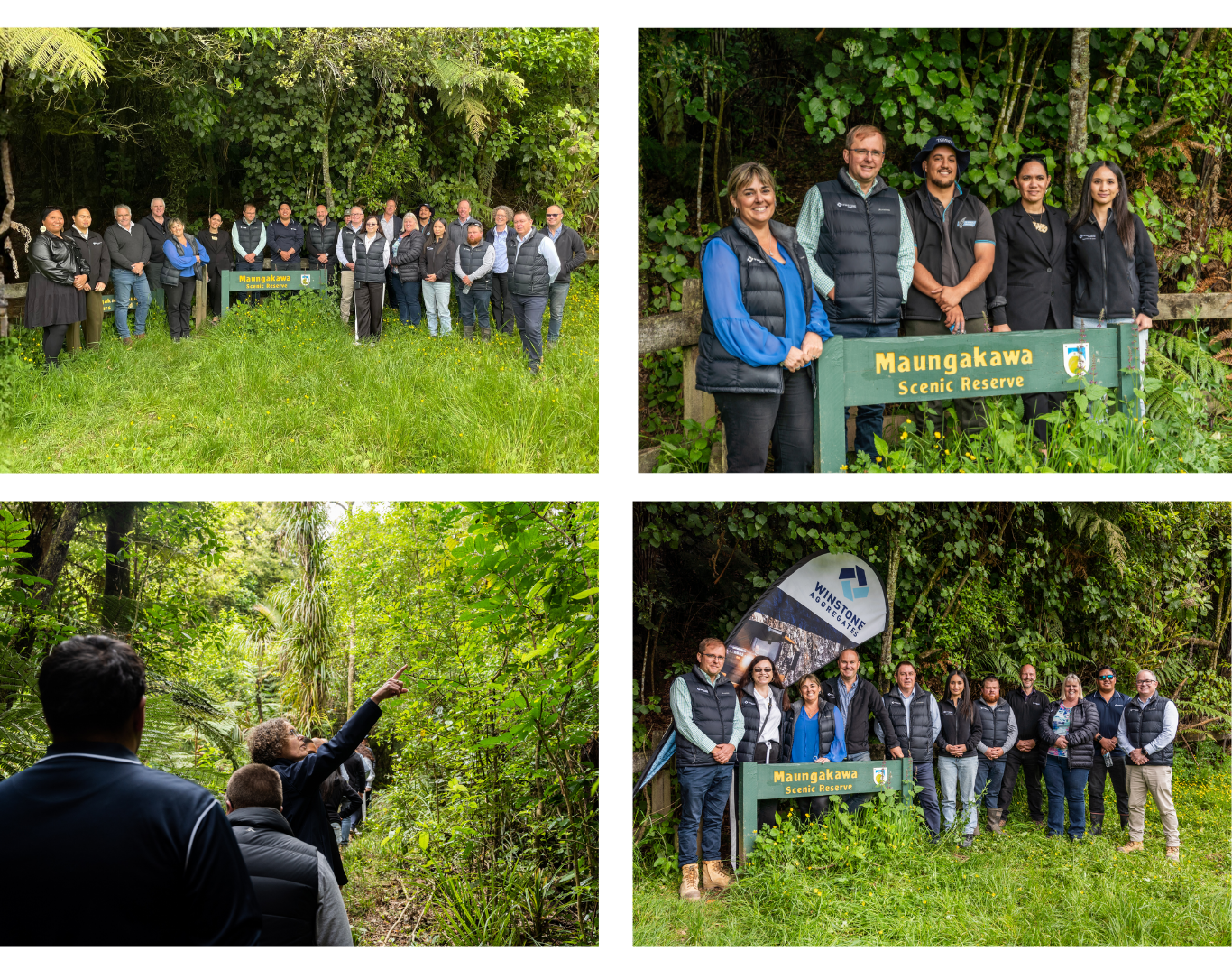
Maungakawa Scenic Reserve Blessing
Yellow-Crowned Kākāriki
To inspire awareness and engagement, Winstone Aggregates invited internal employees to vote for a flagship species. The chosen taonga species was the Yellow-Crowned Kākāriki, a near-threatened native parakeet.
- So far, our partnership with Natureland Wildlife Trsut has helped to successfully rear and transfer nine healthy chicks to Pūkaha National Wildlife Centre at Mount Brice, Wairarapa.
- Pūkaha, a 900-hectare restored forest and breeding site, will play a vital role in reintroducing kākāriki into the wild and strengthening the mauri (life force) of the surrounding ecosystem.
We remain committed to supporting the Yellow-Crowned Kākāriki breeding programme, supporting efforts to return these taonga to their natural habitat. We look forward to sharing future milestones with you.
Tiakiriri Kūkupa Scenic Reserve, Ōtaika
Our biodiversity journey in Northland reached an important milestone with the launch of restoration efforts at Tiakiriri Kūkupa Scenic Reserve. This project is designed to protect and enhance one of the region’s significant native forest ecosystems.
- Approximately 330 hectares of native forest are now undergoing a comprehensive pest control programme to help restore ecological balance.
- The initiative began with a blessing led by mana whenua, acknowledging the cultural and spiritual significance of the land and reinforcing the shared responsibility of caring for it.
- This is more than a one-off project. It represents an ongoing partnership built on the principles of kaitiakitanga, ensuring long-term ecosystem recovery and resilience for generations to come.

Tiakiriri Kūkupa Scenic Reserve, Ōtaika Blessing
Upcoming Restoration Regions
Te Maketu Pā Reserve, Auckland – 3 Sites
Next is restoration work across three sites at Te Maketu Pā Reserve. We're finalising our operations plan, prioritising weed and animal pest control alongside the protection of culturally significant heritage areas.
Wellington Region – Site Selection Underway
For the Wellington region, we are progressing through the site selection process to identify priority areas for future restoration initiatives.
ㅤ
Frequently Asked Questions
What is it?
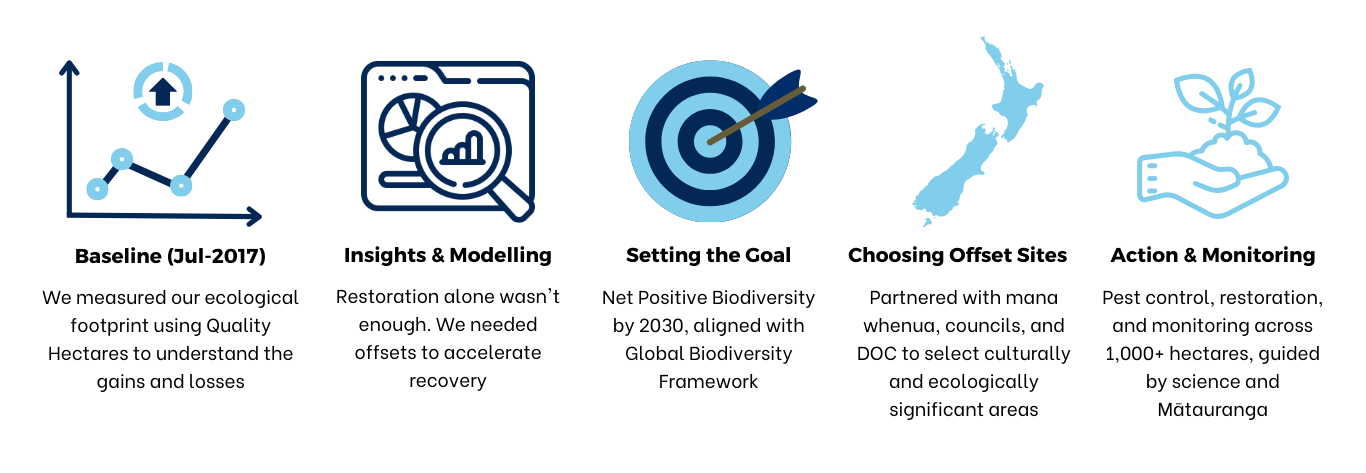
Positive Biodiversity means that by 2030, we aim to leave nature better than we found it. Our goal is to offset the impacts of our operations by restoring and enhancing biodiversity values within existing native forests near our sites.
How are we doing this?
To achieve this, we first quantified biodiversity values by assessing the quality of vegetation cleared since July 2017 (FY18), along with mitigation and voluntary plantings. While we've planted more hectares than we've cleared, the ecological benefits of the original vegetation haven't been fully restored. We're closing this gap by identifying offset sites where we can implement pest control and other measures to improve forest health and ecosystem services.
Why use FY18 baseline?
Global targets for achieving net positive biodiversity often use 2020 for baseline conditions. We wanted to take a proactive approach and backdate this to align with our carbon reduction baseline of FY18 (July 2017 – June 2018).
What framework are we using?
We use the Biodiversity Indicator Reporting System (BIRS), an internationally recognised best-practice framework. The BIRs helps us:
- Identify and measure habitats and ecosystems consistently.
- Integrate biodiversity data into existing environmental reporting systems.
- Contribute site-level data to national and global biodiversity indices.
This approach improves transparency and helps us understand the long-term impacts of extraction on biodiversity.
How was this plan developed?
We partnered with Nature Positive, global leaders in environmental governance and impact assessment, to design a robust framework for biodiversity enhancement. We've also partnered with Mana Whenua to ensure that Mātauranga Māori principles are embedded throughout the process, including the selection of offset sites and creating cultural health indicators for forest monitoring purposes. This collaboration enhances both ecological and cultural outcomes, creating a balanced approach that honours the land and its values.
Why use Mātauranga Māori frameworks in this project?
Mātauranga Māori (traditional Māori language) represents centuries of proven knowledge in sustaining ecosystems in Aotearoa. Combining Western science with Mātauranga Māori ensures a balanced, culturally respectful approach to biodiversity restoration, with kaitiakitanga (guardianship) at its heart.
Where are the offset sites and why have they been chosen?
Our offset sites are located within the same ecological districts as our operational sites with high biodiversity values. This approach addresses residual impacts in a regional context to preserve the unique character of local habitats. To achieve a meaningful ecological uplift by 2030, our selection process considered several key factors including the following:
- Presence of native vegetation and potential for restoration.
- Areas with limited existing pest control, allowing us to establish a clear baseline and maximise ecological gains.
- Ecological attributes such as landscape connectivity, species composition, vegetation type, and degree of degradation.
We also assessed community and Iwi values to recognise cultural, spiritual, and aesthetic significant. This ensures our actions respect local perspectives while enhancing biodiversity outcomes.
What methods of pest control will be used and why?
Final methods will be tailored to each offset site based on expert advice. Likely options include a mix of bait stations and kill traps to maximise effectiveness and protect native species.
How are we going to measure and report?
We will conduct annual assessments of habitat extent and condition at each site. These results will be used to calculate a biodiversity condition index for every site.
Site-level indices will then be combined into a national biodiversity condition index, which is aggregated into a global company index.
This structured approach ensures transparent reporting and tracks our progress toward achieving net Positive Biodiversity by 2030.
What is a BMP?
A Biodiversity Management Plan (BMP) is a site-specific, living document that guides biodiversity risk management throughout the life of a quarry. It identifies, evaluates, and prioritises biodiversity values and ensures land use decisions support conservation goals. BMPs are reviewed and updated regularly to reflect changing conditions.
Our commitment
to the Environment
Winstone Aggregates is committed to the concept of Kaitiakitanga, or being excellent custodians of the planet for now and for generations to come by having a positive impact and leaving a measurable net environmental gain.